

DeNovix Inc.
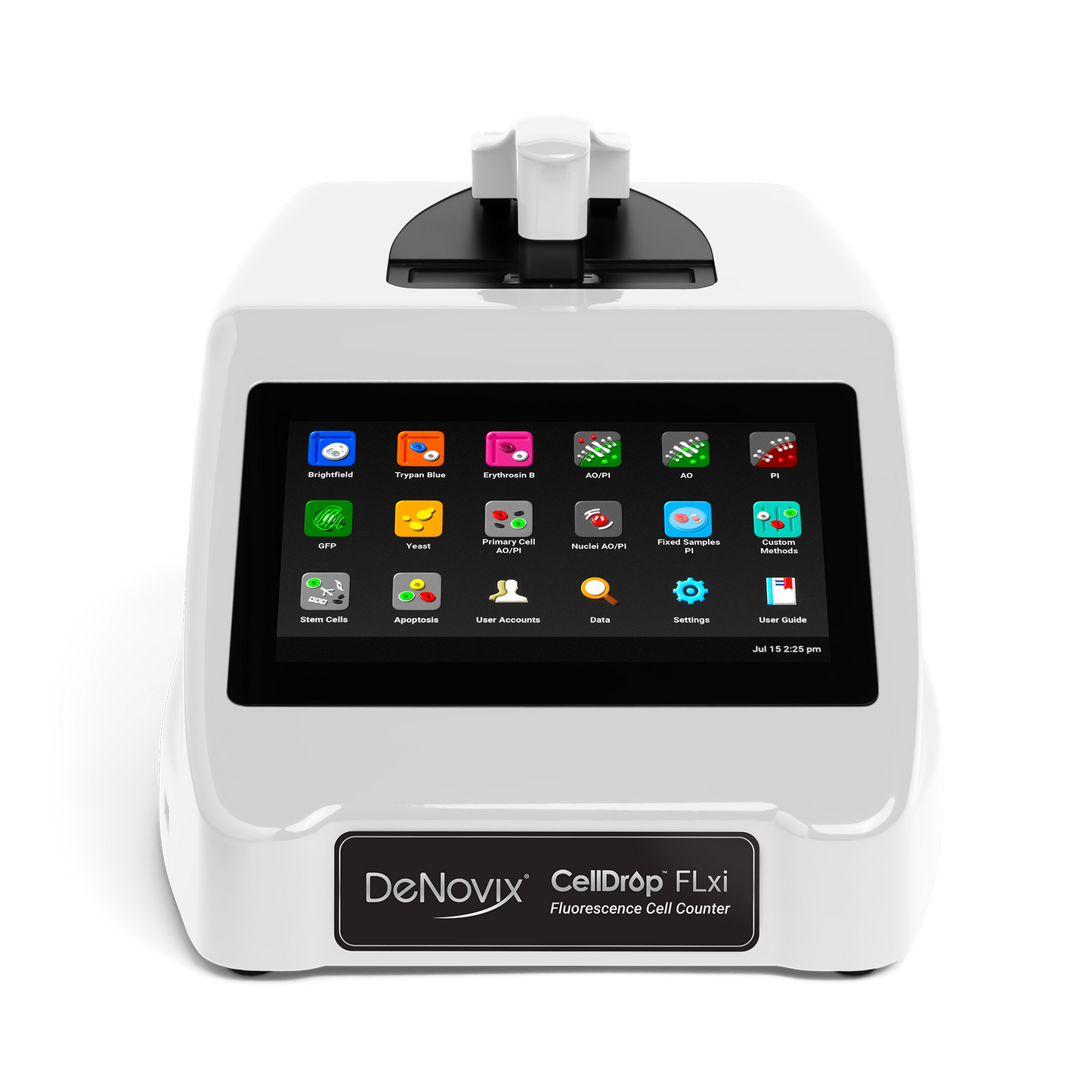
CellDrop Dual Fluorescence Automated Cell Counter
CellDrop Dual Fluorescence Automated Cell Counter
Part Number
SKU:I-20114
Couldn't load pickup availability
Summary
The CellDrop Automated Cell Counter revolutionizes cell counting with its DirectPipette™ technology, which eliminates disposable slides and reduces costs. Highly rated by independent reviewers, CellDrop features dual fluorescence and brightfield optics to make cell counting and viability fast, simple and reproducible. Its user-friendly touchscreen interface and intuitive software streamline workflows from protocol selection to data export. The device offers flexible counting options, supporting both slide-free and traditional slide-based methods.
Key Features
-
Unmatched Cell Counting Performance
- Counts and Viability in Under 10 Seconds
- Sustainable - Reduce Costs and Plastic Use
- Trusted - Used by Thousands of Researchers Worldwide
-
Optimized - Widest Range of Sample Types
- Tissue Culture
- Primary Cells
- Isolated Nuclei
- Hepatocytes
- Organoids
- And more!
- Flexible - DirectPipette™ (No Slides), Reusable or Plastic Slides
- Export and Connectivity - Wi-Fi, USB, Email, Ethernet and More
Specifications
|
Category |
Specification |
|
Instrument Name |
CellDrop Dual Fluorescence Automated Cell Counter |
|
Model Number / SKU |
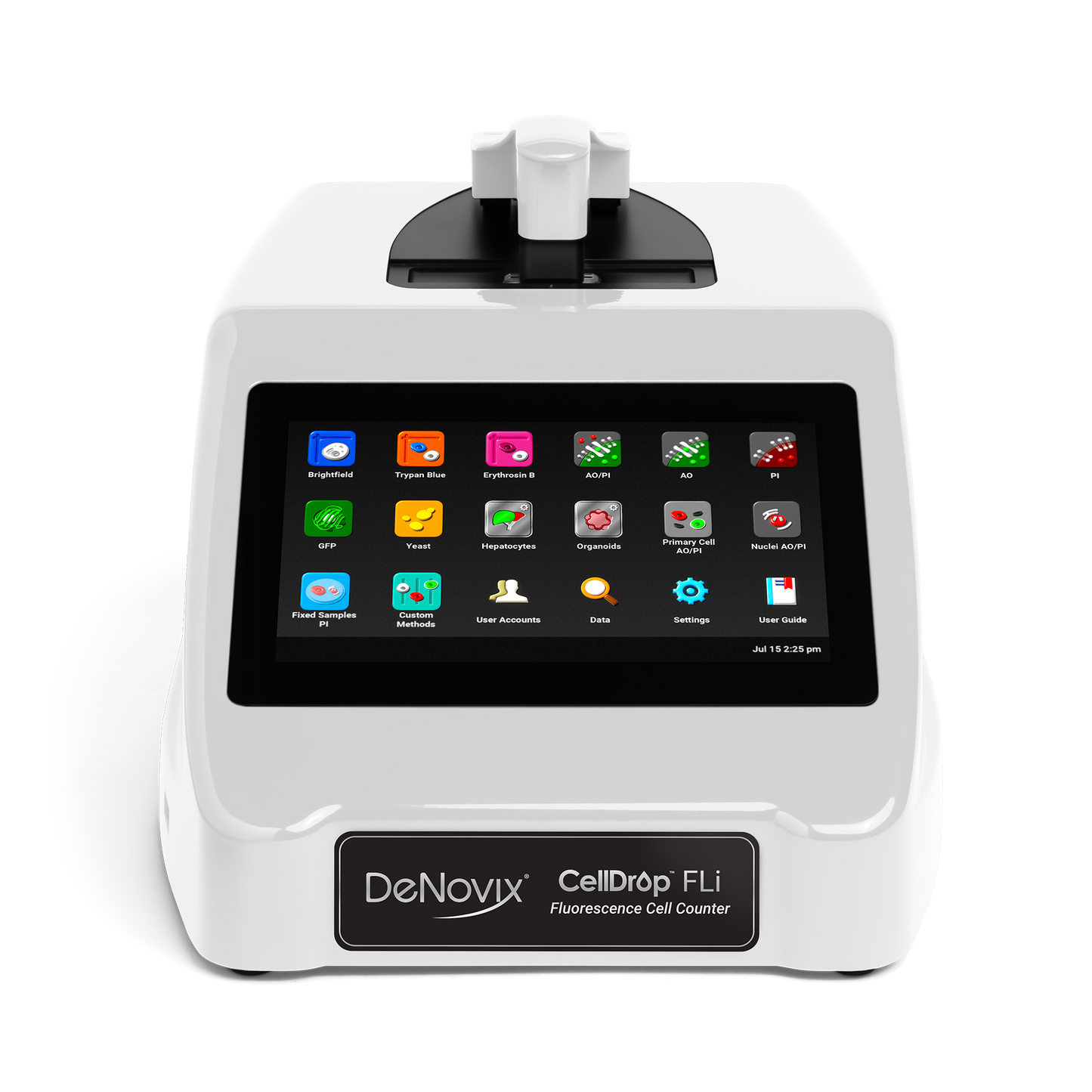
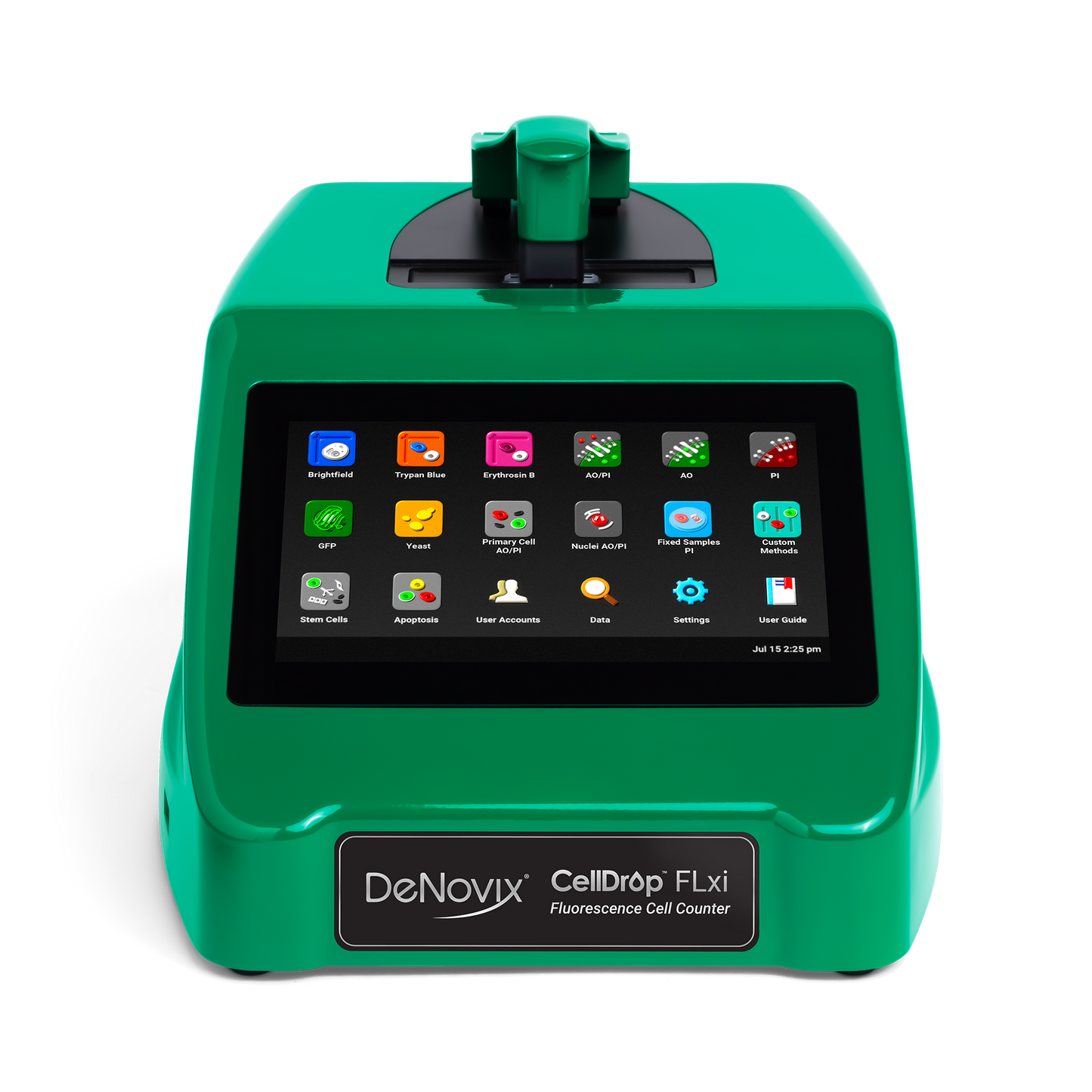
CellDrop FLi CellDrop FLxi |
|
Intended Use |
Automated counting of cells, nuclei, etc. |
|
Dynamic Range |
CellDrop FLi: 7 x 10^2 - 2.5 x 10^7 cells/mL |
|
Cell Size Range |
CellDrop FLi: 4 - 400 µm |
|
Magnification |
CellDrop FLi: 4X |
|
Sample Volume |
5.0 µL @50 µm chamber height; |
|
Measurement Speed |
Brightfield: 3 seconds @1 x 10^6 cell/mL; |
|
Optical Modes |
Dual Fluorescence, Single Fluorescence, Brightfield, Fluorescence + Brightfield |
|
Brightfield Illumination |
LED 530 nm |
|
Fluorescence Illumination |
LED 470 nm |
|
Emission Filters |
525 nm +/- 25 nm |
|
Connectivity |
Wi-Fi, Ethernet, HDMI, USB |
|
Footprint (LxWxH) |
37 x 21 x 18 cm |
|
Weight |
4.4 kg |
|
Warranty |
2 Years |
|
Manufacturer Location |
USA |
|
Colors |
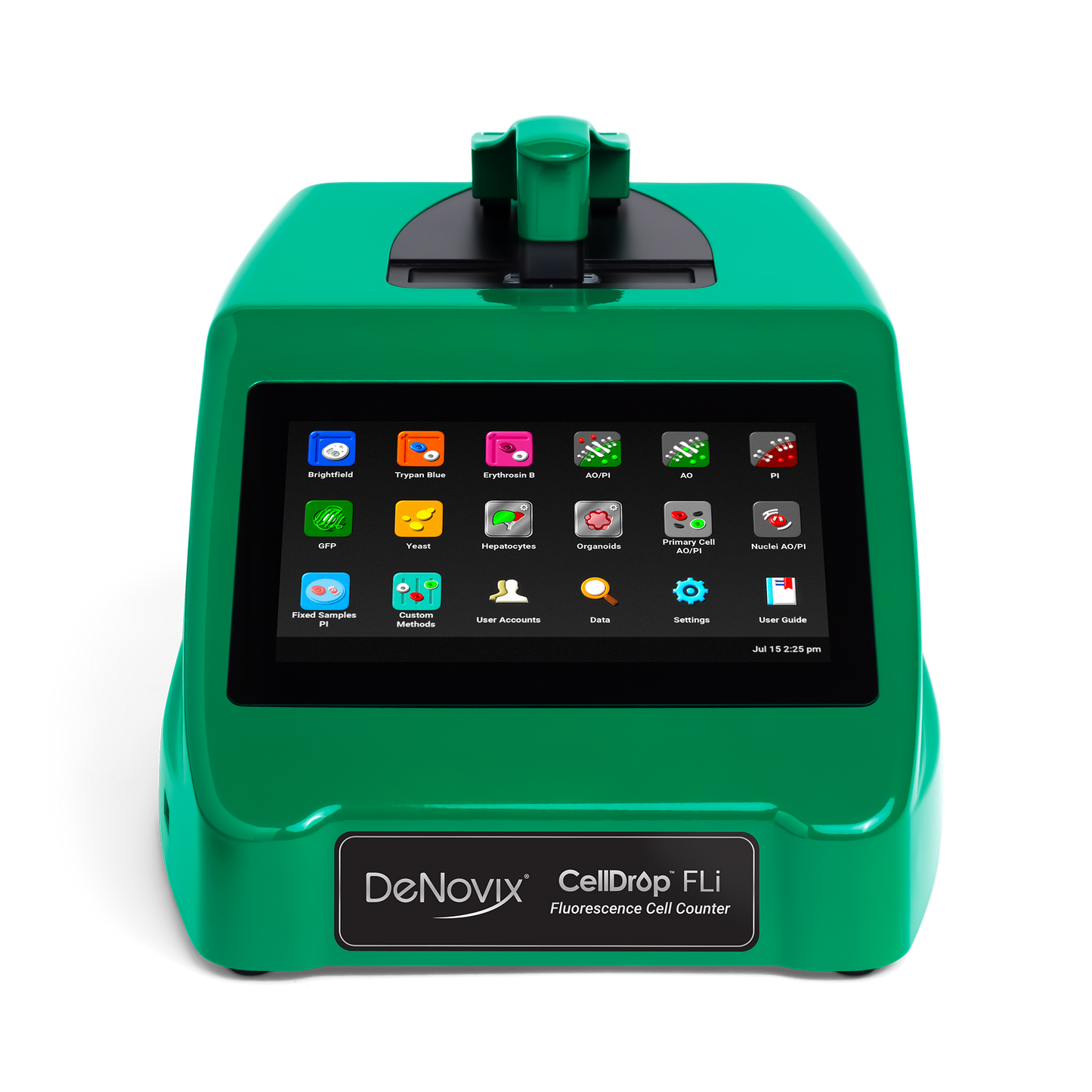
Arctic White, Leaf Green |
|
Certifications |
UL/CSA, CE, FCC, Japan CAB |
|
Patents |
https://www.denovix.com/patents/ |
How it Works: Count Cells Without Slides
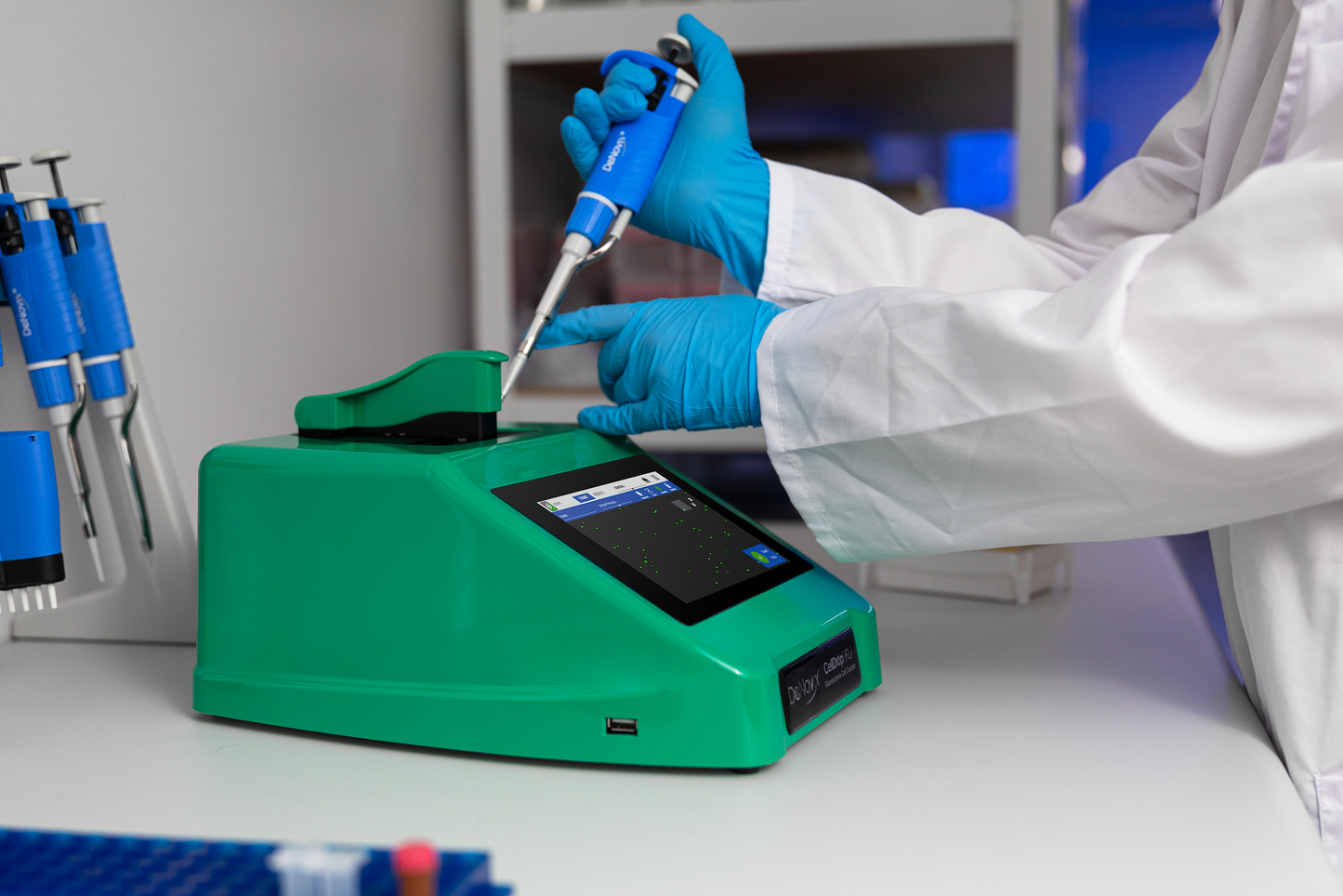
CellDrop’s patented DirectPipette™ technology replaces hemocytometers and plastic slides with an innovative wipe clean, variable height chamber. The sample chamber is formed between two permanent, parallel, optical grade sapphire surfaces. The sample can be loaded from either side and is held in place by surface tension.
Simply load the cell suspension into the sample chamber, press count, and get your results in seconds. After wiping the sample surfaces clean with a dry lab wipe, CellDrop is ready for the next count!
Applications
The CellDrop software excels in a wide variety of applications:
- Tissue Culture
- Primary Cells
- Isolated Nuclei
- Hepatocytes
- Organoids
- GFP
- Fixed Samples
- Yeast
- Pollen
- Algae Cells
- Insect Cells
- Protoplasts
- Apoptosis
- Stem Cells
- Yeast Vitality
Use-Case Scenarios
Here are some reasons why researchers might need to count cells:
- Monitoring cell growth / proliferation rates
- Checking the health of a cell culture sample
- Preparing samples for downstream experiments
- Examining drug testing influences and efficacy
- Performing quality control and regulation checks during the fermentation process
- Confirming sample standardization for clinical trials and therapies
Compare Models
The CellDrop is currently offered in four models. For a full list of specifications, visit https://www.denovix.com/celldrop-model-comparison/.
|
CellDrop FLi |
CellDrop BF |
CellDrop FLxi |
CellDrop BFx |
|
|
Brightfield |
✅ |
✅ |
✅ |
✅ |
|
Dual Fluorescence |
✅ |
- |
✅ |
- |
|
Objective |
4X |
4X |
10X |
10X |
|
Cell Size |
4 - 400 µm |
4 - 400 µm |
2 - 20 µm |
2 - 20 µm |
|
Machine Learning Based Apps |
✅ |
- |
✅ |
- |
|
Applications |
Tissue Culture |
Tissue Culture |
Stem Cells |
Yeast Total Count |
FAQs
What sample volume does CellDrop require?
The default chamber height of 100 µm requires 10 µL of sample. Chamber heights of 50 µm and 400 µm require 5 µL and 40 µL of sample respectively.
Can the CellDrop deal with clumped cells?
Yes. Advanced declustering algorithms have been developed by DeNovix to define individual cells within a cluster.
Why would I need fluorescence?
While brightfield image analysis has been applied to many mammalian cells, there are many cells and applications that are difficult or impossible to analyze with this method alone. Primary cells such as peripheral blood mononuclear cells (PBMCs) are present amongst large numbers of anucleate red blood cells. RBCs may be called as dead cells using brightfield, skewing cell viability estimates. Fluorescence methods specifically target live / dead PBMCs and do not bind to RBCs giving accurate and sensitive counts. Assays such as Green Fluorescent Protein transfection specifically require measuring fluorescence to assess the success of an assay.
How do I know which chamber height to use for my cells?
For most cell samples, our standard 100 µm chamber is appropriate. For high or low density cell suspensions the height may be set at 50 or 400 µm. Software alerts guide the user to the appropriate settings and preferences can be saved in user defined protocols.
Is carryover an issue between samples?
Cells can be removed from upper and lower sample surfaces using a dry laboratory wipe. This is sufficient to clean the surface clean and be ready for the next sample. The live view of the sample area displayed on the screen can be used to confirm that cleaning is successful. If additional cleaning is required add 15 µL of 70% ethanol to the surface and wipe away.
What if the sample surfaces get scratched?
The CellDrop sample chamber is formed between two sapphire surfaces. These cannot be scratched in normal operation.
For machine learning-based applications, do we need to train the algorithm with our own samples?
No, you do not need to train the algorithm with your samples. Our scientists did all the training already using many different sample types. When you use a DeNovix machine learning-based app in your lab, you are using a completed algorithm that does not require any additional training. You just load the sample and press count.
Do you offer free trials?
Yes! In the United States, we offer a 7-day Free Trial program to try the CellDrop Automated Cell Counter in your lab. Shipping costs are covered by DeNovix. Outside of the US, please contact your local distributor to schedule a demonstration. Request a free trial here: https://www.denovix.com/free-trial/
Is CellDrop 21 CFR compliant?
CellDrop has 21 CFR Part 11 compliance ready software. EasyApps Secure provides an optional suite of software controls that allow regulated GxP facilities to easily add CellDrop to their cell counting workflow. The software is fully integrated within the onboard operating system and includes a range of features essential to ensuring compliance, including password protected system access, electronic signature controls, secure audit trail recording, and more.
Is my data saved on the CellDrop?
Yes. CellDrop includes onboard memory that can store thousands of samples. All sample data is automatically saved to the instrument. Additional memory can be purchased if desired.
Does CellDrop require routine calibration?
No, the CellDrop does not require routine calibration.
For research use only.